
“Can I claim for this?” is the question we get asked more than any other. And it matters, because every pound of genuine business expense you record is a pound you don’t pay tax on.
The good news is that the rule behind it is simple. Once you’ve got it, you can answer most of these questions yourself.
The one rule to remember
HMRC says an expense is allowable if it was bought “wholly and exclusively” for your business. In other words: did you buy it only because you run your groups?
A box of pens for the group table – yes. Your weekly food shop – no, even if you did pick up ideas for a taster session on the way round.
What about things I use for both?
This is where most people get stuck. Your phone is the classic example. You use it to message members and post in your group, but you also use it to ring your best friend.
You can’t claim the whole bill, but you can claim the business share of it.
Example
Emma pays £30 a month for her phone contract. She looks through a typical month and works out that around 40% of her use is for her groups.
- Business share: £30 x 40% = £12 a month
- Over the year: £12 x 12 = £144
Emma claims £144 for the year, not £360. She keeps a note of how she got to 40% in case HMRC ever asks for the calculation.
The same approach works for broadband, and for working from home if you use actual costs rather than the flat rate. We’ll cover that one properly in a future article..
The expenses most consultants have
Here’s what we see on nearly every consultant’s account.
Top tip: We’ve a full database of examples – click any of the links below to find out more!
- Venue rent. Usually your biggest expense. You pay it in full, so you claim it in full. Ask your venue for a receipt or statement each month.
- Mileage. Team meetings, training, the bank, promotional events. For 2026-27 you can claim 55p a mile for the first 10,000 business miles and 25p after that. This covers fuel, insurance, servicing and wear and tear, so you don’t claim those separately.
- Stationery and office bits. Pens, paper, printer ink, stamps, envelopes, labels, display boards.
- Phone and broadband. The business share, as in Emma’s example.
- Marketing and advertising. Leaflets, banners, Facebook ads, local magazine adverts, sponsoring the school fete programme.
- Stock you buy to sell. Recipe books, motivational items and so on. What you pay goes in as an expense, and what you sell it for goes in as income.
- Card machine charges. The transaction fees from Zettle, Square or SumUp, plus the cost of the reader itself.
- Travel and overnight stays. A hotel for a training event, plus breakfast and an evening meal while you’re away. Parking, tolls and train tickets count too.
Things you can’t claim
These come up a lot, so it’s worth being clear.
- Everyday clothes. Even if you bought the outfit specially for group, if you could wear it anywhere it doesn’t count. A uniform or branded top you only wear for work is fine (i.e. with a SW logo).
- Mileage to your main groups. This is classed as ‘commuting’ and is not claimable.
- Your own lunch on a normal working day. Food is only claimable when you’re travelling away from your usual routine.
- Hi-Fi bars and magazines. These aren’t your stock – they belong to Slimming World until sold, and you only earn commission. So there’s no purchase to claim, and only your commission counts as income.
- Fines. Parking tickets and speeding fines are never allowable, even if you were on your way to group.
- Anything personal. Claiming for things that aren’t business expenses isn’t a grey area – it’s against the law. If you’re unsure, leave it out.
“I’ve lost the receipt”
It happens. Before you give up on it, try these:
- Search your email for the shop’s name – most online orders send a receipt
- Check your order history on Amazon, eBay or wherever you bought it
- Find the payment on your bank statement. It’s not as good as a receipt, but it’s evidence of the date and amount
You need to keep records for at least five years after the 31 January deadline for that tax year, so it’s worth getting into a routine. The easiest one we know: take a photo of the receipt in the Pulse app before you’ve left the car park. More on that next week.
Not sure about something?
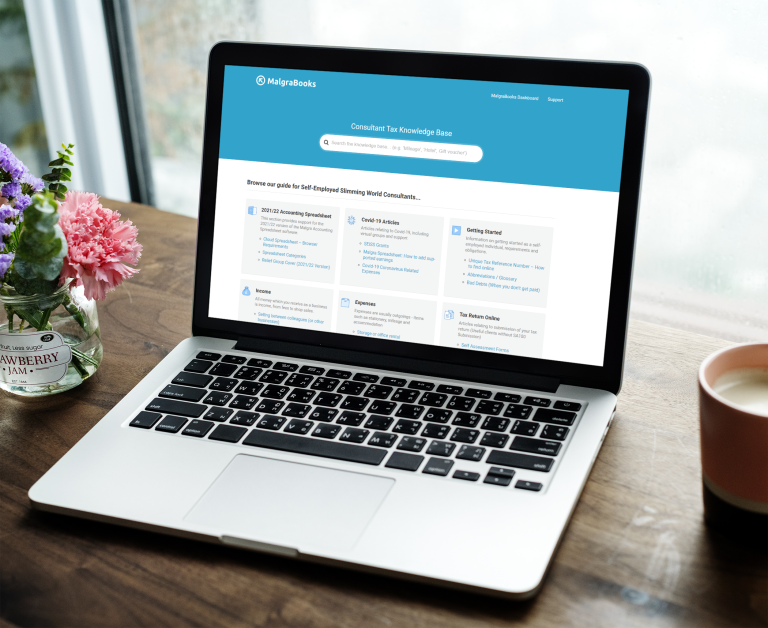
If you’ve got an expense that doesn’t fit neatly into any of the above, drop us a message through the contact form and we’ll tell you where it goes. Our tax guide also has a page on each type of expense.
And if you’re still keeping all of this in a notebook or a spreadsheet, have a look at our packages and pricing to see how Pulse can take it off your hands.
