
Bookkeeping and Making Tax Digital (MTD) for content creators and influencers
A brand deal paid by bank transfer, a payout from the platform, a bit of affiliate commission and a PR parcel on the doorstep. When you make content for TikTok, Instagram or YouTube, money arrives from all over the place, and some of it isn’t money at all. Pulse keeps it in one place, from your brand invoices to your Making Tax Digital updates.
- Record brand deals, payouts and gifted products as they come in
- Quote and invoice brands from your phone
- Send your quarterly updates and tax return straight to HMRC
Jade’s Wednesday
Filming day-
At home8:30am, filming a get ready with me video
-
Pennine Candle Co. paysBrand deal for two Instagram Reels, paid by bank transfer£450
-
Affiliate payoutCommission from the links under her videos£85
-
Parcel from Moorland HaircareA hair dryer to review on TikTok, worth £120£120
-
Shoot at Heaton ParkFilming an autumn walk for her YouTube channel8.5 miles from home
-
Back home4:30pm, editing tonight8.5 miles
When Making Tax Digital starts for you
Making Tax Digital for Income Tax means keeping your records digitally and sending HMRC a short update every three months, then a final declaration after the tax year ends. Whether you're in depends on your turnover, the total you charge your customers before any expenses, not your profit.
- From 6 April 2026Over £50,000Already started
- From 6 April 2027Over £30,000Based on your 2025/26 tax return
- From 6 April 2028Over £20,000Based on your 2026/27 tax return
An example. Over the year you’re paid £20,000 for brand deals, £7,000 in platform payouts and £2,000 in affiliate commission. That’s £29,000. Brands also send you £3,000 worth of products in return for posts, and those count too, so your turnover is £32,000. If your 2025/26 tax return shows that, you’ll need to use Making Tax Digital from 6 April 2027. Without the gifts, you’d have had another year.
The quarterly updates are due by 7 August, 7 November, 7 February and 7 May. If you have other self-employed work or rent out a property, that income counts towards the total too. When do I need to start?
What counts as income, gifts included
This is the one creators most often get wrong. The fee from a brand is obvious. It’s everything else that gets missed.
Brand deals and sponsored posts. The full fee for the work. If an agency or manager collects it for you and takes a cut, the whole fee is your income and their commission is an expense.
Platform payouts. Ad revenue, creator programme payments, subscriptions and money from viewers during live streams all count.
Affiliate commission. What you earn when people buy through your links or use your discount code.
Gifted products and free services. HMRC says “Income from creating online content includes gifts and services you receive from promoting products online.” That covers a PR parcel, a free hotel night or a free treatment in return for content. You use “the value of what it would have cost if you had to pay for them”. If something turns up that you didn’t ask for, with no deal to post about it, it’s less clear cut, so keep a note of it and ask us.
Paid in dollars or euros. Keep it simple. Record the amount in pounds that actually lands in your account.
The platforms may tell HMRC. Since 1 January 2024, some websites and apps have had to collect details of the people who sell goods or services through them and report what they earned to HMRC each year. So HMRC may already see some of your payouts. Make sure your own records match. Selling goods or services on a digital platform (gov.uk)
HMRC’s guide: Check if you need to tell HMRC about your income from online platforms.
| One year of content | Amount |
|---|---|
| Brands paid for review videos | £700 |
| Gifted products | £300 |
| Adverts on the videos | £200 |
| Total income | £1,200 |
That’s over the £1,000 trading allowance, so it needs telling to HMRC. The allowance is one £1,000 for all your side income together, and it’s what you earn before expenses, not your profit.
| What you buy | How it goes in |
|---|---|
| Camera, lights, microphone, gimbal | An expense in the year you buy it, on the cash basis |
| Phone or laptop you use personally too | The business share only |
| Kit, if you use traditional accounting | A capital allowance, usually the full cost in the year you buy it |
The cash basis has been the default for sole traders since April 2024. Read more about capital allowances.
What you can claim as a content creator
Every allowable expense brings down the profit you pay tax and National Insurance on. These are the ones creators claim most. Keep the receipt for each, or scan it into Pulse.
Cameras, lights and sound
Cameras, lenses, ring lights, tripods, gimbals, microphones and memory cards. See how bigger items work above, or read about capital allowances.
Phone and data
The business share of the phone you film and post on, and its contract. Phone and broadband
Editing and computer
The laptop you edit on, editing apps, cloud storage and licensed music. Only the business share if the family uses them too. Office equipment
Props and backdrops
Backdrops, props and set dressing you buy just for filming and don’t use around the house.
Agency and manager fees
The commission your agency or manager takes from your brand deals.
Travel to shoots
55p a mile for the first 10,000 business miles in a car, then 25p, plus train fares and parking. Cars, vans and mileage
Promotion and tools
Paid boosts, a website, a scheduling app or a link in bio tool. Marketing and subscriptions
Filming and editing at home
If you work at home for 25 hours or more a month, you can claim a flat rate of £10 to £26 a month. Simplified expenses
What you can’t claim
- Everyday clothes, make-up and haircuts, even if you bought them for a video
- Gifted products, because you didn’t pay for them. They go in as income instead
- A holiday, even if you post about it
- The personal share of your phone, laptop or broadband
- Fuel and running costs for your car if you claim mileage for it
- Your actual costs, if you’ve taken off the £1,000 trading allowance instead
For the full list, see Allowable expenses, what are they? and clothing expenses.
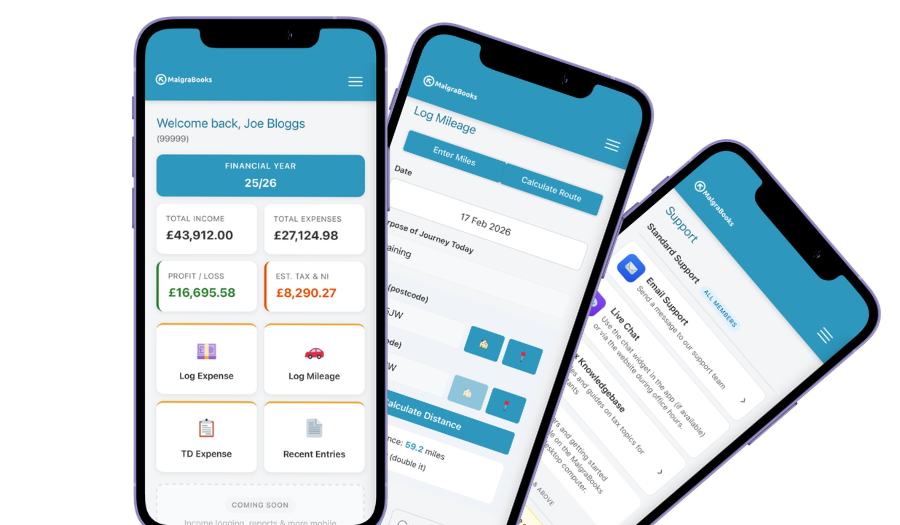
Access your accounts on your mobile
Designed for iPhone and Android phones, so you can add a payment, log a journey or scan a receipt between jobs, and check your reports and tax as you go.
See the mobile appHow Pulse helps
Pulse is our online bookkeeping system, with apps for iPhone and Android. Here’s what content creators use most.
Quotes into invoices
Send a brand your rate for three videos and a story. When they say yes, turn the quote into an invoice in one click, with nothing to type twice.
QuotesMonthly ambassador deals
On a monthly retainer with a brand? Set it up once and Pulse creates the invoice every month. Send it automatically or check it first.
Recurring invoicesScan your receipts
New ring light, a backdrop or a memory card? Take a photo of the receipt in the app and it’s saved against the expense, so nothing gets lost in your email.
Receipt scannerHours filming and editing at home
A ten minute video can take a whole evening to edit. Log your working from home time and Pulse works out the flat rate you can claim.
Working from homeMiles to every shoot
Enter postcodes or use your location, and Pulse works out the miles. Save the studios and locations you go back to in your address book.
Logging mileageStraight to HMRC
Pulse is recognised by HMRC for Making Tax Digital. Send your quarterly updates from Pulse, and your tax return if you choose that package.
Sending MTD updatesEverything in one package
Small Business Complete includes everything on this page. There are no invoice limits, and you can start partway through the year and add the months you've missed.
MalgraBooks is recognised by HMRC for Making Tax Digital. HMRC reference D5P1NR.
Small Business Complete
- Bookkeeping, invoicing and mileage in Pulse
- Unlimited receipt scanning
- Making Tax Digital quarterly updates
- Your tax return sent to HMRC
Questions content creators ask us
I only post as a hobby. Do I need to register?
If your income from content, plus any other self-employed income, is more than £1,000 in a tax year, yes. That includes what your gifted products are worth. It’s what you earn before expenses, not your profit. You need to register by 5 October after the end of the tax year you started in. For example, if you started in August 2026, that’s by 5 October 2027. How to register with HMRC
A brand sent me something I didn’t ask for. Does it count?
If you post about it in return, or you’ve agreed to, treat it as income at what it would have cost you to buy. If it just turned up and there’s no deal to post about it, it’s less clear cut. Keep a note of what it was and what it’s worth, and ask us.
Some of my payouts are in dollars. What do I record?
Record the amount in pounds that reaches your bank or payment account. That’s the money you actually received, and it’s the figure your bank statement will show if you ever need to check it.
My agency takes its cut before paying me. What’s my income?
If your deal is with the brand and the agency collects the money for you, your income is the full fee and the agency’s commission is an expense. If the agency books the work in its own name and pays you a fee, your income is what the agency pays you. Your contract usually makes it clear. If not, ask us.
I have a job as well. Does my content income count?
Yes, if it’s over £1,000 for the year. Your wages are taxed through PAYE and don’t count towards Making Tax Digital. What counts is your self-employed turnover, from content and any other business, plus any rental income.
I bought an outfit just for a video. Can I claim it?
Not if it’s the kind of thing you could wear day to day, even if you only wore it once on camera. The same goes for make-up and hair. Clothing expenses
Got a question that isn't here? Send us a message and the team will get back to you.
TikTok, Instagram and YouTube are trade marks of their owners. MalgraBooks isn’t connected with them.