
Bookkeeping and Making Tax Digital (MTD) for craft fair and market stall sellers
You’ve spent weeks making stock, then it’s an early start, a car full of crates and a long day behind the table taking cash and card. Pulse keeps each fair’s takings, pitch fees and miles in one place, and sends your Making Tax Digital updates to HMRC.
- Record each fair’s takings, cash and card, on your phone
- Scan receipts for pitch fees and materials
- Send your quarterly updates and tax return straight to HMRC
Bev’s Saturday
Christmas fair-
Loads the car and leaves home7:00am, with stock, gazebo and table
-
Sets up, Ashworth High School fairPitch fee paid, card reader charged12.0 miles from home
-
Morning, 9am to 1pm£180 in cash, £260 by card£440
-
Afternoon, 1pm to 4pm£140 in cash, £220 by card£360
-
Packs down and drives home5:30pm12.0 miles
When Making Tax Digital starts for you
Making Tax Digital for Income Tax means keeping your records digitally and sending HMRC a short update every three months, then a final declaration after the tax year ends. Whether you're in depends on your turnover, the total you charge your customers before any expenses, not your profit.
- From 6 April 2026Over £50,000Already started
- From 6 April 2027Over £30,000Based on your 2025/26 tax return
- From 6 April 2028Over £20,000Based on your 2026/27 tax return
An example. You have a stall at a Saturday market 48 weeks a year and take £500 a week. That’s £24,000. Add ten Christmas fairs at £800 each, another £8,000, and your turnover is £32,000. Making Tax Digital looks at your takings before pitch fees, materials or any other costs. If your 2025/26 tax return shows that, you’ll need to use Making Tax Digital from 6 April 2027.
The quarterly updates are due by 7 August, 7 November, 7 February and 7 May. If you have other self-employed work or rent out a property, that income counts towards the total too. When do I need to start?
Recording your takings at each fair
This is where we see stall holders go wrong most. Every fair or market day has its own set of figures: what you took in cash, what went through the card reader, and what it cost you to be there. If you sell to the public, HMRC lets you keep one record of your gross takings for each day, so you don’t need a line for every sale.
Record the full takings, cash and card together. The common mistake is only recording what the card reader pays into your bank, after its fees. Put the full card sales in as income and the reader’s fees in as an expense. When you count the cash tin at the end of the day, take off the float you started with, because that was your own money.
Pitch and stall fees are a business expense. Keep the booking confirmation or receipt, even if you paid months before the fair.
Christmas is the busy season for most stall holders. Takings from fairs up to 5 January go in your quarterly update due by 7 February, so it helps to add each fair as you go rather than leave a pile of cash tins for January.
If you’re just starting out, you don’t need to tell HMRC while your takings stay at £1,000 a year or less, before costs. That’s the trading allowance. Over that, you need to register by 5 October after the end of the tax year you started in. If you’re not sure whether your making counts as a business yet, ask us.
Read more about card payment charges, venue rent and registering with HMRC.
| Bev’s Saturday fair | Amount |
|---|---|
| Takings in cash | £320.00 |
| Takings by card | £480.00 |
| Pitch fee | £60.00 |
| Card reader fees | £8.40 |
| Left after the pitch and fees | £731.60 |
That’s £800 of income and £68.40 of expenses. Your materials, packaging and mileage come off too, which brings the profit down further.
What you can claim as a craft fair or market stall seller
Every allowable expense brings down the profit you pay tax and National Insurance on. These are the ones stall holders claim most. Keep the receipt for each, or scan it into Pulse.
Pitch and stall fees
Fees for craft fairs, Christmas markets, farmers’ markets and your regular weekly pitch. Venue rent
Materials and stock
The wool, clay, wood, card or ingredients you make with, and anything you buy in to sell on. Stock and goods for resale
Packaging and bags
Paper bags, gift boxes, tissue paper, labels and price tags for the things you sell.
Gazebo, table and display
Your gazebo and weights, folding table, display stands, crates and stall lights. Bigger items may need to go in as a capital allowance.
Card reader and fees
The reader itself and the fees SumUp, Square and similar take on each card sale. Card payment charges
Insurance
Public and product liability cover for your stall. Some organisers ask to see it before they’ll take your booking.
Mileage to fairs
If you make and keep your stock at home and drive out to different fairs, those journeys are usually business travel. A regular weekly pitch can be less clear-cut, so ask us. Cars, vans and mileage
Parking
Car park charges at a fair or market, or when you go to collect supplies. Parking fines don’t count. Parking charges
What you can’t claim
- Your lunch, coffee and snacks on a normal fair day. Meals are usually only claimable on an overnight business trip
- Materials for things you make for yourself, your home or as presents
- Parking and speeding fines
For the full list, see Allowable expenses, what are they?
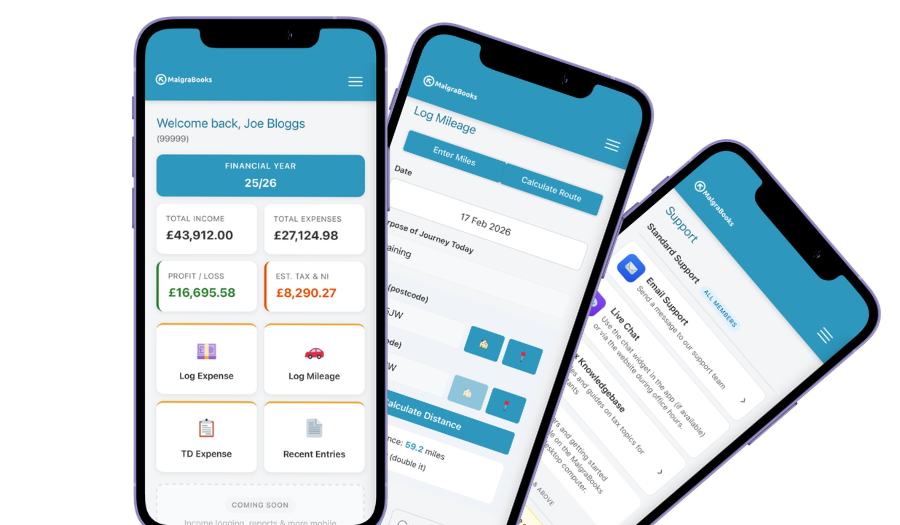
Access your accounts on your mobile
Designed for iPhone and Android phones, so you can add a payment, log a journey or scan a receipt between jobs, and check your reports and tax as you go.
See the mobile appHow Pulse helps
Pulse is our online bookkeeping system, with apps for iPhone and Android. Here’s what stall holders use most.
Takings on the day
Packed up and sitting in the car? Add the day’s cash and card takings in the app before you drive home, so every fair is in Pulse ready for your next update.
The Pulse appScan your receipts
Take a photo of the pitch fee receipt or the bag from the craft supplier in the app and it’s saved against the expense, so nothing gets lost in a crate.
Receipt scannerMiles to every fair
Enter postcodes or use your location, and Pulse works out the miles. Save the venues you go back to in your address book so each journey takes seconds.
Logging mileageRegular costs remembered
Some costs come round every month, like a card reader subscription, a storage unit or insurance paid by direct debit. Add them as recurring expenses and Pulse asks you to confirm each one when it’s due.
Recurring expensesInvoices for shop orders
If a gift shop or café orders a box of your work to sell, send them an invoice from Pulse and mark it paid when the money comes in.
Creating an invoiceStraight to HMRC
Pulse is recognised by HMRC for Making Tax Digital. Send your quarterly updates from Pulse, and your tax return if you choose that package.
Sending MTD updatesEverything in one package
Small Business Complete includes everything on this page. There are no invoice limits, and you can start partway through the year and add the months you've missed.
MalgraBooks is recognised by HMRC for Making Tax Digital. HMRC reference D5P1NR.
Small Business Complete
- Bookkeeping, invoicing and mileage in Pulse
- Unlimited receipt scanning
- Making Tax Digital quarterly updates
- Your tax return sent to HMRC
Questions stall holders ask us
I only do a few fairs a year. Do I need to tell HMRC?
If your takings are £1,000 a year or less, before any costs, you generally don’t need to. Over that, you need to register as self-employed by 5 October after the end of the tax year you started in. For example, if your first fair was in November 2026, that’s by 5 October 2027. How to register with HMRC
Do I need to record every sale?
No. If you sell to the public, you can keep one record of your gross takings for each day. Add up the cash and the card sales for the fair and put that total in Pulse on the day.
Does my cash float count as takings?
No. If you start with £50 of change and finish with £370 in the tin, your cash takings are £320. The £50 was your own money going round.
My card reader pays out after taking its fee. What do I record?
Record the full card sales as income and the fee as an expense. If you sold £480 by card and £471.60 reached your bank, that’s £480 of income and £8.40 of card fees.
Do I need to register for VAT?
Only if your turnover goes over £90,000 in any rolling 12 months. Most stall holders are well under this. VAT explained
I’ve been using a notebook. Can I switch partway through the year?
Yes. You can add the earlier months of the tax year when you join, so the whole year sits in Pulse ready for your updates and tax return.
Got a question that isn't here? Send us a message and the team will get back to you.