
Bookkeeping and Making Tax Digital (MTD) for self-employed dog groomers
A cockapoo at nine, two Westies before lunch and a matted spaniel to finish. Most of your dogs come back every four to eight weeks, their owners pay in cash, by card or online, and you’re forever buying shampoo and new blades. Pulse keeps it all in one place, from the regular bookings to your Making Tax Digital updates.
- Invoice regular dogs without starting from scratch
- Scan the receipt for every bottle of shampoo and set of blades
- Send your quarterly updates and tax return straight to HMRC
Hannah’s Thursday
Mobile grooming van-
Leaves home8:00am
-
Biscuit the cockapoo, Lime Tree AvenueFull groom every four weeks, paid online from the invoice£503.5 miles from home
-
Mr and Mrs Carter’s Westies, Hall LaneBath and tidy for both, paid by card£702.0 miles
-
Grooming wholesaler, Mill StreetPaid £36 for shampoo and two clipper blades, receipt scanned2.5 miles
-
Bramble the springer spaniel, Chapel StreetFull groom and de-matting, paid in cash£551.5 miles
-
Teddy the shih tzu puppy, Victoria RoadFirst puppy groom, paid online£303.0 miles
-
Back home4:30pm4.5 miles
When Making Tax Digital starts for you
Making Tax Digital for Income Tax means keeping your records digitally and sending HMRC a short update every three months, then a final declaration after the tax year ends. Whether you're in depends on your turnover, the total you charge your customers before any expenses, not your profit.
- From 6 April 2026Over £50,000Already started
- From 6 April 2027Over £30,000Based on your 2025/26 tax return
- From 6 April 2028Over £20,000Based on your 2026/27 tax return
An example. You groom 16 dogs a week from a converted garage, at an average of £45 a dog, and take seven weeks off a year. That’s 45 weeks × £720, or £32,400 of turnover. Any shampoo or accessories you sell to owners count too. If your 2025/26 tax return shows that, you’ll need to use Making Tax Digital from 6 April 2027.
The quarterly updates are due by 7 August, 7 November, 7 February and 7 May. If you have other self-employed work or rent out a property, that income counts towards the total too. When do I need to start?
Home salon, rented unit or mobile van
Where you groom changes what you can claim more than anything else, and it’s the question groomers ask us most. Plenty of groomers move from one set-up to another as they get busier, so it’s worth knowing all three.
A home salon. If you groom in a spare room or a converted garage, you can claim part of your household bills. The simple way is the flat rate based on hours, which is £26 a month at most. A busy salon uses a lot of hot water, electricity for dryers and heating, so working out the business share of your actual bills often comes to more. That share can include electricity, gas, water, council tax and home insurance, worked out by how much of the house you use and for how long. A grooming bath, table and dryers can be claimed as equipment. Building work to convert the garage usually can’t be set against your profit. Converting part of your home and having customers visit can also mean business rates on that part, and your home insurance may not cover customers coming in.
A rented unit. The rent, business rates, electricity, water and insurance for the unit are all business costs, claimed in full. The catch is travel. Your drive from home to the unit each day is ordinary commuting, which you can’t claim. A trip from the unit to the wholesaler during the day is business travel.
A mobile van. You travel from home to each client and back, so those journeys are business travel. You can claim the flat mileage rate, or the van’s actual running costs plus capital allowances on the van itself. A fitted grooming van costs a lot more than an ordinary van, and the mileage rate doesn’t allow for that, so actual costs often work out better. You can’t switch a van to the mileage rate once you’ve claimed capital allowances on it.
Everyone’s set-up is a bit different, so if you’re not sure which way to claim, ask us before you do.
Read more about simplified expenses, renting premises, cars, vans and mileage and capital allowances.
| Where you groom | Premises costs |
|---|---|
| Home salon | Flat rate, or a share of your household bills |
| Rented unit | Rent, rates and bills in full |
| Mobile van | Mileage, or the van’s actual costs |
| Hours at home a month | Per month |
|---|---|
| 25 to 50 | £10 |
| 51 to 100 | £18 |
| 101 or more | £26 |
| Car or van | Per mile |
|---|---|
| First 10,000 business miles | 55p |
| Every mile after that | 25p |
If you claim mileage for a van, you can’t also claim its fuel or running costs. Once you’ve used the mileage rate for a vehicle, you keep using it for as long as you use that vehicle for work.
What you can claim as a dog groomer
Every allowable expense brings down the profit you pay tax and National Insurance on. These are the ones dog groomers claim most. Keep the receipt for each, or scan it into Pulse.
Shampoos and products
Shampoo, conditioner, detangling spray, ear cleaner, towels, and the bandanas and bows you finish each dog with.
Clippers, blades and scissors
New blades, blade sharpening, clippers, scissors, brushes and combs. A hydraulic table, bath or dryer may need to go in as a capital allowance.
Your premises
Rent, rates and bills for a unit, or the business share of your household bills for a home salon. Renting premises
Your van
The mileage rate, or the van’s actual running costs plus capital allowances. Pick one for each vehicle and stick with it. Cars, vans and mileage
Insurance
Public liability insurance, cover for the dogs in your care and insurance for your equipment or unit.
Courses and training
Courses that keep your grooming skills up to date, such as a hand stripping or breed styling day. Training costs
Grooming tunics
Hair-resistant tunics and aprons you only wear for grooming, ideally with your business name on. Everyday clothes don’t count. Clothing expenses
Card fees and adverts
Fees charged by SumUp, Stripe and similar, plus leaflets, a local Facebook ad or business cards. Card payment charges
What you can’t claim
- Your daily drive from home to a rented unit
- Fuel for your van if you claim mileage for it
- Shampoo, food and vet bills for your own dogs
- Building work to convert your garage, in most cases
- Everyday clothes and shoes, even old ones you keep just for work
- Parking and speeding fines
For the full list, see Allowable expenses, what are they?
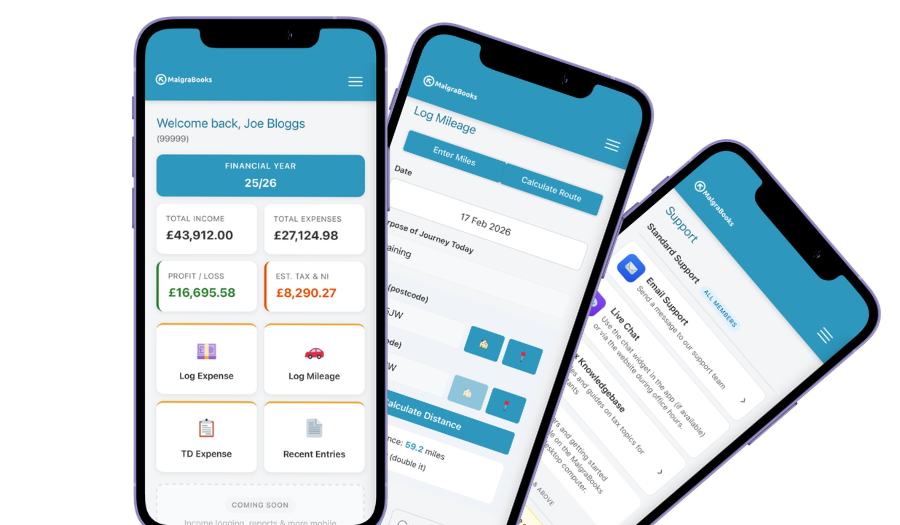
Access your accounts on your mobile
Designed for iPhone and Android phones, so you can add a payment, log a journey or scan a receipt between jobs, and check your reports and tax as you go.
See the mobile appHow Pulse helps
Pulse is our online bookkeeping system, with apps for iPhone and Android. Here’s what dog groomers use most.
Regular dogs, regular invoices
If a dog comes every four weeks, set up a recurring invoice and Pulse creates it each time. Send it automatically or check it first. For dogs on six or eight weeks, a quick invoice from your phone takes a minute.
Recurring invoicesPaid when you hand the dog back
Add your Stripe, SumUp or PayPal.Me link and a Pay online button appears on your invoices. The money goes straight to you, part payments are tracked, and the provider’s fees go in as an expense.
Online paymentsScan your receipts
Take a photo of the receipt for shampoo, blades or a new pair of scissors and it’s saved against the expense, before it gets wet or covered in hair.
Receipt scannerUnit rent and insurance remembered
Your unit rent, insurance and phone bill come round like clockwork. Add them as recurring expenses and Pulse asks you to confirm each one when it’s due.
Recurring expensesMiles for mobile groomers
Enter postcodes or use your location, and Pulse works out the miles. Save regular clients and your wholesaler in the Address Book so each journey takes seconds.
Logging mileageStraight to HMRC
Pulse is recognised by HMRC for Making Tax Digital. Send your quarterly updates from Pulse, and your tax return if you choose that package.
Sending MTD updatesEverything in one package
Small Business Complete includes everything on this page. There are no invoice limits, and you can start partway through the year and add the months you've missed.
MalgraBooks is recognised by HMRC for Making Tax Digital. HMRC reference D5P1NR.
Small Business Complete
- Bookkeeping, invoicing and mileage in Pulse
- Unlimited receipt scanning
- Making Tax Digital quarterly updates
- Your tax return sent to HMRC
Questions dog groomers ask us
Do I need a licence to groom dogs?
In England, grooming on its own doesn’t currently need an animal activity licence from the council. Boarding dogs or offering day care does, so check with your council before you add either. If you groom at home, check about planning permission too, especially if you’re converting a garage or expect lots of customers. An example council’s licensing page
I groom a few dogs at weekends alongside my job. Do I need to register?
If your grooming income is more than £1,000 in a tax year before any costs, yes, even if you have a job as well. You need to register by 5 October after the end of the tax year you started in. For example, if you started in June 2026, that’s by 5 October 2027. How to register with HMRC
Owners give me tips and a little extra at Christmas. Is that taxable?
Yes. Tips you get as a self-employed groomer are part of your income, whether they’re cash in your hand or added to a card payment. Add them in the app on the day, the same as the groom itself.
A client didn’t turn up and I kept their deposit. Is that income?
Yes. A deposit or no-show fee you keep is income, the same as a groom you’ve done. If you refund it, there’s nothing to record.
I sell shampoo and accessories to owners. How do I record that?
What you sell them for is income, and what you paid for the stock is an expense. It helps to record the products you sell apart from the ones you use on the dogs, so you can see what your sales side actually makes. Stock and goods for resale
Do I need to register for VAT?
Only if your turnover goes over £90,000 in any rolling 12 months. Most self-employed dog groomers are well under this. VAT explained
Got a question that isn't here? Send us a message and the team will get back to you.