
Bookkeeping and Making Tax Digital (MTD) for self-employed dog walkers and pet sitters
You’re out in all weathers with a car full of muddy dogs and keys to half the street. Some clients pay weekly, some pay for ten walks at a time, and some pay you when they get back from holiday. Pulse keeps track of all of it, from the pick-up miles to your Making Tax Digital updates.
- Log pick-up runs and walks on your phone
- Send weekly invoices automatically and track part payments for packages
- Send your quarterly updates and tax return straight to HMRC
Ellie’s Monday
£15 a dog a walk-
Leaves home8:30am
-
Morning group walk4 dogs, 1 hour, on weekly invoices£606.0 miles from home, with pick-ups
-
Pet-sitting visit, Ivy HouseFeed the cats and clean the litter tray, paid by bank transfer£143.5 miles, after drop-offs
-
Afternoon group walk3 dogs, 1 hour, paid by card£455.5 miles, with pick-ups
-
Back home4:00pm4.0 miles, after drop-offs
When Making Tax Digital starts for you
Making Tax Digital for Income Tax means keeping your records digitally and sending HMRC a short update every three months, then a final declaration after the tax year ends. Whether you're in depends on your turnover, the total you charge your customers before any expenses, not your profit.
- From 6 April 2026Over £50,000Already started
- From 6 April 2027Over £30,000Based on your 2025/26 tax return
- From 6 April 2028Over £20,000Based on your 2026/27 tax return
An example. You do 40 dog walks a week at £15 each, plus £100 a week of pet-sitting visits, and take four weeks off a year. That’s 48 weeks × £700, or £33,600 of turnover. If your 2025/26 tax return shows that, you’ll need to use Making Tax Digital from 6 April 2027.
The quarterly updates are due by 7 August, 7 November, 7 February and 7 May. If you have other self-employed work or rent out a property, that income counts towards the total too. When do I need to start?
Getting paid for regular walks and packages
Most of your work is the same dogs on the same days every week. That’s great for planning, but it’s easy to lose track of who has paid for what. This is the question we’re asked most by dog walkers.
Regular weekly clients. Set each one up once with a recurring invoice. Pulse creates it every week, every two weeks, every four weeks or every month, and can send it for you.
Packages of walks. If a client buys a block of walks, the money is income when you receive it, not as you do each walk. If they pay in two parts, each part goes in when it arrives. That’s how the cash basis works, which is the standard way for sole traders to keep their records.
Picking dogs up. If you work from home and drive out to collect dogs from different houses, then on to a walk, those journeys are usually business travel. That includes the first pick-up and the drive home after the last drop-off. If you always go to one fixed place, such as a field you rent every day, ask us before you claim the trip there.
Read more about cars, vans and mileage, parking charges and fines.
| Payment | Amount |
|---|---|
| 10 walks at £15 | £150 |
| Paid when booked | £75 |
| Paid after walk 5 | £75 |
| Left to pay | £0 |
Mileage for 2026/27 is 55p a mile for the first 10,000 business miles in a car or van, and 25p after that. It covers fuel, insurance, servicing and wear and tear. If you claim mileage for a vehicle, you can’t also claim its fuel or running costs, and once you’ve used the mileage rate for it you keep using it.
What you can claim as a dog walker or pet sitter
Every allowable expense brings down the profit you pay tax and National Insurance on. These are the ones dog walkers and pet sitters claim most. Keep the receipt for each, or scan it into Pulse.
Licences and permits
In England, boarding other people’s dogs in your own home, or running dog day care, needs an animal activity licence from your council, and the fee is claimable. Walking dogs and visiting pets in their own home don’t need one. Some councils charge for a permit to walk several dogs at once in their parks, and that’s claimable too.
Insurance
Public liability, cover for the animals in your care, and cover for the keys you hold.
Leads and kit
Leads, harnesses, long lines, water bowls, towels and a pet first aid kit. Bigger items may need to go in as a capital allowance.
Treats and poo bags
The treats you buy and use on walks, poo bags, and shampoo or wipes for muddy dogs.
Car and van changes
Removable crates, boot guards and seat covers are kit you can claim. Fitted changes, like built-in cages in a van, depend on how you claim for the vehicle. If you use the mileage rate, ask us first. Capital allowances
DBS check
You don’t have to have one, but many clients like to see it. If you choose to get a basic DBS check for the business, you can claim the fee.
Phone and broadband
The business share of your mobile and internet. Phone and broadband
Advertising
Leaflets, business cards, a simple website, or fees for listing on pet care sites. Marketing costs
What you can’t claim
- Everyday waterproofs, walking boots and wellies, even if you only wear them for walks
- Food, vet bills or insurance for your own dog
- Parking fines and other penalties
- Food or treats a client buys for their own pet
For the full list, see Allowable expenses, what are they?
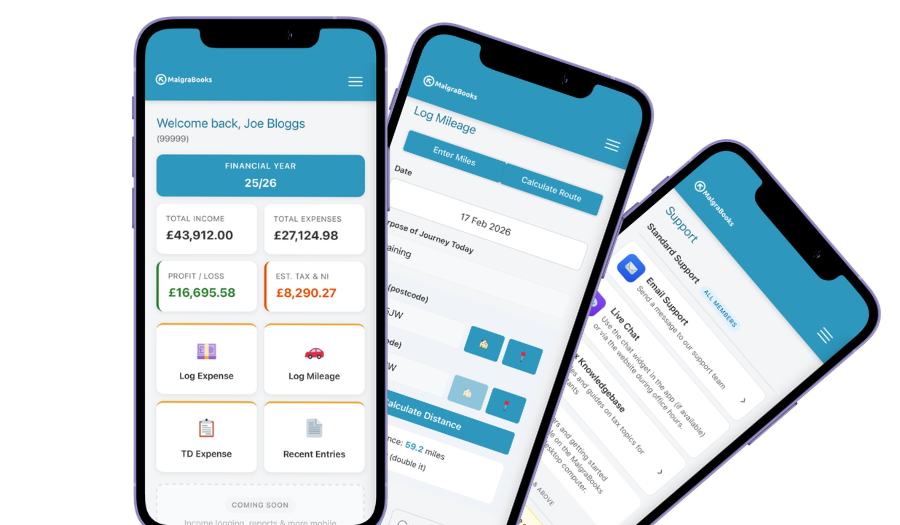
Access your accounts on your mobile
Designed for iPhone and Android phones, so you can add a payment, log a journey or scan a receipt between jobs, and check your reports and tax as you go.
See the mobile appHow Pulse helps
Pulse is our online bookkeeping system, with apps for iPhone and Android. Here’s what dog walkers and pet sitters use most.
Recurring invoices
Set up a regular client once and Pulse creates their invoice every week, two weeks, four weeks or month. Send it automatically or check it first.
Recurring invoicesPackages and part payments
Add your Stripe, SumUp or PayPal.Me link and a Pay online button appears on your invoices. The money goes straight to you, and if a client pays for a package in parts, Pulse tracks what’s left.
Online paymentsMileage on your phone
Enter postcodes or use your location, and Pulse works out the miles. Save the houses you collect from in your address book so each pick-up run takes seconds.
Logging mileageQuotes for holiday cover
Send a quote for two weeks of pet-sitting visits while a client is away. When they say yes, turn it into an invoice in one click.
QuotesScan your receipts
Take a photo of the receipt for treats, poo bags or a new harness in the app and it’s saved against the expense, so nothing gets lost in a coat pocket.
Receipt scannerStraight to HMRC
Pulse is recognised by HMRC for Making Tax Digital. Send your quarterly updates from Pulse, and your tax return if you choose that package.
Sending MTD updatesEverything in one package
Small Business Complete includes everything on this page. There are no invoice limits, and you can start partway through the year and add the months you've missed.
MalgraBooks is recognised by HMRC for Making Tax Digital. HMRC reference D5P1NR.
Small Business Complete
- Bookkeeping, invoicing and mileage in Pulse
- Unlimited receipt scanning
- Making Tax Digital quarterly updates
- Your tax return sent to HMRC
Questions dog walkers and pet sitters ask us
Do I need to register as self-employed?
If you earn more than £1,000 a year from walking and pet sitting before expenses, yes. You need to register by 5 October after the end of the tax year you started in. For example, if you started in June 2026, that’s by 5 October 2027. How to register with HMRC
A client paid for ten walks upfront. When do I record it?
When the money arrives. Under the cash basis, a payment is income on the day you receive it, even if you won’t do all the walks until next month. If they pay half now and half later, record each part when it comes in.
Do I need a licence to walk dogs?
Not an animal activity licence. In England, that’s needed for boarding other people’s dogs in your own home and for dog day care, not for walking dogs or visiting pets in their own home. Some councils have their own rules on how many dogs you can walk at once in their parks, and a few charge for a permit, so check with yours.
Can I claim for my own dog?
No. Food, vet bills and insurance for your own pets are personal costs, even if your dog comes along on group walks.
Do I need to register for VAT?
Only if your turnover goes over £90,000 in any rolling 12 months. Most self-employed dog walkers and pet sitters are well under this. VAT explained
I’ve been using a spreadsheet. Can I switch partway through the year?
Yes. You can add the earlier months of the tax year when you join, so the whole year sits in Pulse ready for your updates and tax return.
Got a question that isn't here? Send us a message and the team will get back to you.