
Bookkeeping and Making Tax Digital (MTD) for self-employed independent travel agents
You plan holidays from the spare room, often through a network such as Travel Counsellors or Not Just Travel. A booking you make in October might not pay you until your clients are home from their trip next summer. Pulse keeps track of the commission as it lands, the fees going out and your Making Tax Digital updates.
- Record commission on the day it’s paid to you
- Keep track of your network fee and your hours at home
- Send your quarterly updates and tax return straight to HMRC
Helen’s Thursday
Works from home-
At her desk9:00am, emails and supplier offers
-
Mr and Mrs Fletcher, video callBook two weeks in Crete for next June. Commission confirmed, paid after they travel
-
Monthly commission paidThree holidays where the clients travelled last month£540
-
Mrs Grant, café on Market StreetTalks through a river cruise for her ruby wedding, quote sent that evening6.0 miles from home
-
Back at her desk2:30pm6.0 miles
When Making Tax Digital starts for you
Making Tax Digital for Income Tax means keeping your records digitally and sending HMRC a short update every three months, then a final declaration after the tax year ends. Whether you're in depends on your turnover, the total you charge your customers before any expenses, not your profit.
- From 6 April 2026Over £50,000Already started
- From 6 April 2027Over £30,000Based on your 2025/26 tax return
- From 6 April 2028Over £20,000Based on your 2026/27 tax return
An example. Your network pays you £2,500 a month after taking off a £100 monthly fee. Your turnover is your commission before the fee, so that’s £2,600 a month, or £31,200 a year, not the £30,000 that reached your bank. It isn’t the price of the holidays you sold, either. If your 2025/26 tax return shows £31,200, you’ll need to use Making Tax Digital from 6 April 2027.
The quarterly updates are due by 7 August, 7 November, 7 February and 7 May. If you have other self-employed work or rent out a property, that income counts towards the total too. When do I need to start?
Commission, fees and fam trips
These are the three things travel agents ask us about most, and they’re where home-based agents’ books usually go wrong.
Your income is your commission. When your clients pay the tour operator or your network, the holiday money was never yours. Your income is the commission you earn on it. If you sell holidays in your own name and take the full price from clients yourself, it works differently, so ask us.
When it counts. Since 6 April 2024, cash basis has been the standard way for sole traders to keep their books. On cash basis, commission counts when it’s paid to you, not when you make the booking. So if a booking made this winter pays out after the client travels next summer, it goes in the tax year the money arrives. If you’ve chosen traditional accounting instead, the timing can be different.
Network fees. A monthly fee is a business expense. If your network takes it off your commission before paying you, record the full commission as income and the fee as an expense, as in the table. If your agreement says the network keeps a share of the commission rather than charging a fee, your income is usually just your share. Your statement should show which. A one-off joining fee can be treated differently, so ask us about that one.
Fam trips. Seeing hotels, ships and resorts for yourself is part of the job, but HMRC is strict here. If a trip has any holiday purpose as well as a business one, the whole cost can be refused, not just part of it. A packed programme of hotel visits and training is far easier to justify than a week by the pool with one site visit. Keep the itinerary, and ask us before you claim.
Working from home. If you work 25 hours or more a month at home, you can claim a flat rate instead of working out a share of your bills.
Read more about simplified expenses, conferences and training and HMRC’s guidance on trips that mix business and a holiday.
| On the statement | Amount |
|---|---|
| Commission earned | £2,600 |
| Monthly fee taken off | £100 |
| Paid to you | £2,500 |
| Your income in Pulse | £2,600 |
| Your expense in Pulse | £100 |
Your profit comes out the same either way, but recording the full £2,600 keeps your turnover right, and turnover is what decides when Making Tax Digital applies to you.
| Hours at home a month | Per month |
|---|---|
| 25 to 50 | £10 |
| 51 to 100 | £18 |
| 101 or more | £26 |
The flat rate doesn’t cover your phone or broadband. Claim the business share of those on top.
What you can claim as an independent travel agent
Every allowable expense brings down the profit you pay tax and National Insurance on. These are the ones home-based travel agents claim most. Keep the receipt or statement for each, or scan it into Pulse.
Your network’s fees
The monthly fee, and any charges for extra marketing, tools or support you pay for. Ask us about a one-off joining fee before you claim it.
Working from home
A flat £10 to £26 a month if you work 25 hours or more at home, or a share of your actual household bills. Simplified expenses
Phone and broadband
The business share of your mobile and home internet, the line you’re on to clients and suppliers all day. Phone and broadband
Laptop and desk
A laptop, headset, second screen, printer and desk chair. Bigger items may go in as a capital allowance. Office equipment
Training and conferences
Destination and product training, and courses that keep the skills you already use up to date. Training costs
Trips wholly for business
Costs you pay yourself for a trip that’s genuinely all work, like a programme of hotel and ship visits. Anything with a holiday side to it usually isn’t allowed, so ask us first.
Marketing
Social media ads, your own website, business cards and printed flyers for a wedding fair or a local event. Marketing costs
Travel to meet clients
Mileage to see a client or go to a travel show, plus train fares and parking. Cars, vans and mileage
What you can’t claim
- Coffee or lunch you buy for a client while you talk through their holiday
- Your own holidays, even if you come back with ideas for clients
- A partner’s or family member’s costs on a fam trip
- The price of the holidays your clients pay for
- Your actual costs, if you’ve taken off the £1,000 trading allowance instead
For the full list, see Allowable expenses, what are they?
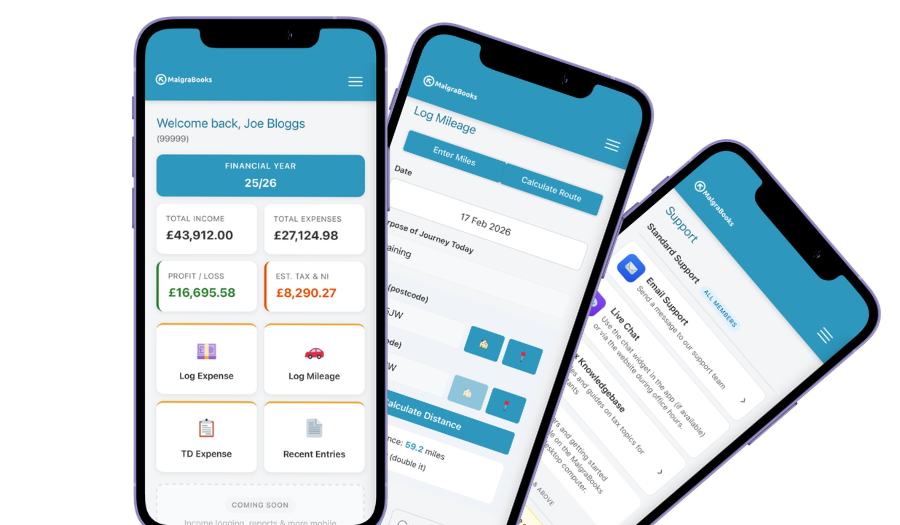
Access your accounts on your mobile
Designed for iPhone and Android phones, so you can add a payment, log a journey or scan a receipt between jobs, and check your reports and tax as you go.
See the mobile appHow Pulse helps
Pulse is our online bookkeeping system, with apps for iPhone and Android. Here’s what independent travel agents use most.
Commission as it lands
Add each commission payment as income on the day it’s paid, with the full amount before any fee. That keeps your turnover right, and turnover is what’s checked against the Making Tax Digital thresholds.
When MTD starts for youYour network fee remembered
Your network fee, phone contract and broadband come round every month. Add them as recurring expenses and Pulse asks you to confirm each one when it’s due.
Recurring expensesHours at home
Log the hours you spend on calls, quotes and bookings at home, and Pulse works out your working from home allowance for the month.
Working from homeScan your receipts
Take a photo of the receipt for a new headset, a training day or a train ticket to a travel show, and it’s saved against the expense.
Receipt scannerMiles to meet clients
Enter postcodes or use your location, and Pulse works out the miles. Handy for the coffee with a honeymoon couple or the drive to a wedding fair.
Logging mileageStraight to HMRC
Pulse is recognised by HMRC for Making Tax Digital. Send your quarterly updates from Pulse, and your tax return if you choose that package.
Sending MTD updatesEverything in one package
Small Business Complete includes everything on this page. There are no invoice limits, and you can start partway through the year and add the months you've missed.
MalgraBooks is recognised by HMRC for Making Tax Digital. HMRC reference D5P1NR.
Small Business Complete
- Bookkeeping, invoicing and mileage in Pulse
- Unlimited receipt scanning
- Making Tax Digital quarterly updates
- Your tax return sent to HMRC
Questions independent travel agents ask us
Is the price of the holiday my income, or just my commission?
If your clients pay the tour operator or your network, only your commission is your income. A £4,000 cruise that earns you £300 adds £300 to your turnover, not £4,000. If you take the full price from clients and sell holidays in your own name, ask us, as that’s treated differently.
I’m not paid until my clients have travelled. When does it count?
On cash basis, which most sole traders use, it counts when the money is paid to you. A booking you make in January for a holiday in August goes in your books when the commission arrives, even if that’s in a later tax year.
A client cancelled and the commission was taken back. What do I do?
Record it in Pulse when it happens, so your income for the year is right. If the commission had already gone in your books, the money taken back reduces your income. Keep the statement that shows it.
I still have a job. Do I need to register as self-employed?
If your commission is more than £1,000 in a tax year before any costs, yes, even with a job as well. Register by 5 October after the end of the tax year you started in. If you started in June 2026, that’s by 5 October 2027. Your wages don’t count towards the Making Tax Digital thresholds. How to register with HMRC
Do I need to register for VAT?
Only if your VAT taxable turnover goes over £90,000 in any rolling 12 months. VAT on travel commission has its own rules, so ask us before you register. VAT explained
How long do I need to keep my commission statements?
At least five years after the 31 January deadline for that tax year. Keep your network’s statements with your receipts, as they show both your commission and any fees taken off. Keeping records
Got a question that isn't here? Send us a message and the team will get back to you.
Travel Counsellors and Not Just Travel are trade marks of their owners. MalgraBooks isn’t connected with either.