
Bookkeeping and Making Tax Digital (MTD) for self-employed make-up artists
Your diary is full of 6am starts at the bride’s house, trials on weekday evenings, photo shoots and the odd lesson. Deposits come in months before the wedding, balances on the morning, and the receipts for lashes and foundation end up at the bottom of your kit bag. Pulse keeps the bookings, the miles and your Making Tax Digital updates in one place.
- Turn a bridal party quote into an invoice in one click
- Take the deposit and the balance with a Pay online button
- Send your quarterly updates and tax return straight to HMRC
Aisha’s Saturday
Bridal and photo shoots-
Leaves home5:45am, kit already packed
-
Emma’s wedding morning, HaleBride, three bridesmaids and her mum. £390 balance paid online, plus a £20 tip in cash. £6 car park, receipt scanned£41018.0 miles from home
-
Photographer’s studio, AncoatsHalf-day shoot for a clothing brand, invoiced to the photographer£15014.5 miles
-
Grace, DidsburyOne-to-one make-up lesson, paid by card£606.0 miles
-
Back home7:15pm, brushes to wash3.5 miles
When Making Tax Digital starts for you
Making Tax Digital for Income Tax means keeping your records digitally and sending HMRC a short update every three months, then a final declaration after the tax year ends. Whether you're in depends on your turnover, the total you charge your customers before any expenses, not your profit.
- From 6 April 2026Over £50,000Already started
- From 6 April 2027Over £30,000Based on your 2025/26 tax return
- From 6 April 2028Over £20,000Based on your 2026/27 tax return
An example. You do about 40 weddings a year at an average of £600 for the bride and her party, which is £24,000. Add £5,000 from photo shoots and events and £1,500 from lessons, and that’s £30,500 of turnover. If your 2025/26 tax return shows that, you’ll need to use Making Tax Digital from 6 April 2027. Deposits count in the tax year you receive them, so a busy spring of bookings for next summer adds to this year’s figure.
The quarterly updates are due by 7 August, 7 November, 7 February and 7 May. If you have other self-employed work or rent out a property, that income counts towards the total too. When do I need to start?
Deposits, trials and your kit
Brides book a year or more ahead, pay for a trial a few months before and settle up on the morning. That’s three payments for one wedding, often spread across two tax years. This is where make-up artists’ books most often go wrong.
Deposits. Most sole traders use the cash basis, which has been the default since April 2024. That means income counts when the money reaches you, not when the wedding happens. A deposit paid in March 2026 belongs in 2025/26, even though the wedding is in June 2026. If a couple cancel and you keep a non-refundable deposit, it’s still your income. If you give a deposit back, ask us how to record it.
Trials. A paid trial is income on the day it’s paid. If the trial is included in your bridal price, there’s nothing separate to record. Either way, the products you use at a trial are a business cost, even when you don’t charge for it.
Products and kit. Foundation, lashes, setting spray and disposable applicators get used up, so they’re everyday expenses. Bigger things you keep, like a ring light, a make-up chair or a trolley case, can usually be claimed in full in the year you buy them on the cash basis. Make-up you use on yourself isn’t a business cost, even if it came from your kit.
Read more about allowable expenses and larger or long-term items.
| Payment | Amount |
|---|---|
| Trial, paid February 2026 | £60 |
| Deposit, paid March 2026 | £100 |
| In your 2025/26 figures | £160 |
| Balance, paid June 2026 | £390 |
| In your 2026/27 figures | £390 |
The bridal party price was £490, the bride at £250 and four others at £60 each. The trial was charged on top.
| What you bought | How it’s claimed |
|---|---|
| Foundation, lashes, setting spray | Expense when you buy it |
| Sponges, wands, brush cleaner | Expense when you buy it |
| Ring light, chair, trolley case | Full cost when you buy it, on the cash basis |
If you use traditional accounting instead of the cash basis, bigger kit goes in as a capital allowance. Not sure which you use? Ask us.
What you can claim as a make-up artist
Every allowable expense brings down the profit you pay tax and National Insurance on. These are the ones make-up artists claim most. Keep the receipt for each, or scan it into Pulse.
Products
Foundation, concealer, lashes, lash glue, primers and setting spray you use on clients, including restocking after a busy wedding season.
Disposables and hygiene
Mascara wands, sponges, cotton pads, spatulas, sanitiser and brush cleaner. The things that keep your kit clean between clients.
Brushes and kit
Brushes, palettes and storage, plus bigger items like a ring light, a make-up chair or an airbrush machine. Larger items
Travel to brides and venues
If you work from home and travel out to clients, you can usually claim 55p a mile for the first 10,000 business miles then 25p, plus parking. A hotel and meals when you stay over before a wedding far away count too. Travel to a salon or studio you work from every day is commuting, so ask us if that’s you. Cars, vans and mileage
Training and masterclasses
Courses that keep the skills you already use up to date, like a bridal masterclass or a new technique for the work you do now. Training costs
Insurance
Public liability and treatment insurance, and cover for your kit while it’s in the car or at a venue.
Portfolio and advertising
Your website, wedding directory listings, online ads, business cards and the stand at a wedding fair. Marketing costs
Card fees and phone
Fees taken by your card reader or payment link, and the business share of the phone you message brides on. Card payment charges
What you can’t claim
- Make-up and skincare you use on yourself
- Your black work outfit, or any everyday clothes you only wear for work
- Fuel and running costs for your car if you claim mileage for it
- Parking fines
- A course to train as a make-up artist before you started, or to move into a new line of work
For the full list, see Allowable expenses, what are they?
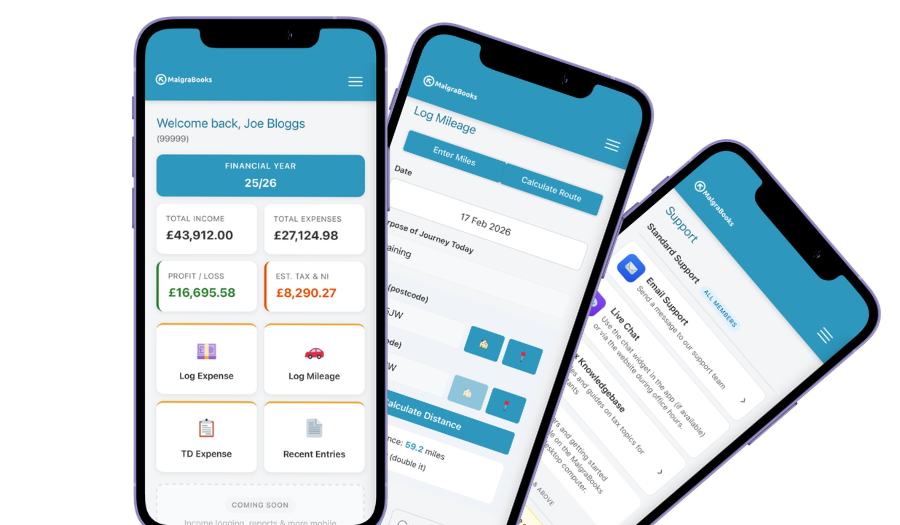
Access your accounts on your mobile
Designed for iPhone and Android phones, so you can add a payment, log a journey or scan a receipt between jobs, and check your reports and tax as you go.
See the mobile appHow Pulse helps
Pulse is our online bookkeeping system, with apps for iPhone and Android. Here’s what make-up artists use most.
Quotes for the bridal party
List the bride, each bridesmaid and the mums on one quote. When the bride says yes, turn it into an invoice in one click, with nothing to type twice.
QuotesDeposit now, balance later
Add your Stripe, SumUp or PayPal.Me link and a Pay online button appears on your invoices. The money goes straight to you, and Pulse tracks the deposit and what’s still owed.
Online paymentsMiles to every venue
Enter postcodes or use your location, and Pulse works out the miles. Save the venues and studios you go back to in your address book.
Logging mileageScan product receipts
Restocked lashes and foundation? Take a photo of the receipt in the app and it’s saved against the expense. Online orders work the same way.
Receipt scannerAdmin at home
Replying to brides, editing your portfolio and cleaning kit all take time at home. Log your hours and Pulse works out your working from home allowance.
Working from homeStraight to HMRC
Pulse is recognised by HMRC for Making Tax Digital. Send your quarterly updates from Pulse, and your tax return if you choose that package.
Sending MTD updatesEverything in one package
Small Business Complete includes everything on this page. There are no invoice limits, and you can start partway through the year and add the months you've missed.
MalgraBooks is recognised by HMRC for Making Tax Digital. HMRC reference D5P1NR.
Small Business Complete
- Bookkeeping, invoicing and mileage in Pulse
- Unlimited receipt scanning
- Making Tax Digital quarterly updates
- Your tax return sent to HMRC
Questions make-up artists ask us
The bridal party gave me a tip. Do I need to record it?
Yes. Tips are part of your self-employed income, whether they’re cash in an envelope or added to an online payment. Add them in Pulse on the day, the same as any other payment.
A wedding was cancelled and I kept the deposit. Is it still income?
Yes. A non-refundable deposit you keep is income for the tax year you received it. If you refund some or all of it, ask us how to record that, especially if the refund falls in a different tax year.
I stay over the night before a wedding. Can I claim the hotel?
Usually, yes. Hotel rooms and meals on overnight business trips are allowable, and so is the travel there. Keep the receipts and scan them into Pulse. HMRC’s guide to travel expenses
I only do weddings at weekends alongside a job. Do I need to register?
If your make-up income is £1,000 or less in a tax year, before any costs, you usually don’t need to tell HMRC. Over that, register for Self Assessment by 5 October after the end of the tax year you started. Your wages from your job don’t count towards the Making Tax Digital figures. How to register with HMRC
Do I need to register for VAT?
Only if your turnover goes over £90,000 in any rolling 12 months. Bookings bunch up in wedding season, so check the last 12 months as a whole, not just a quiet patch. VAT explained
I’ve been using a spreadsheet. Can I switch partway through the year?
Yes. You can add the earlier months of the tax year when you join, including deposits you’ve already taken, so the whole year sits in Pulse ready for your updates and tax return.
Got a question that isn't here? Send us a message and the team will get back to you.