
Bookkeeping and Making Tax Digital (MTD) for self-employed web designers and developers
A homepage to finish for one client, a round of plugin updates for another and a meeting about a new site after lunch. Most of your money arrives in stages, a deposit, a payment when the designs are signed off and a balance when the site goes live, with hosting and care plans coming in every month on top. Pulse keeps track of who’s paid what and sends your Making Tax Digital updates to HMRC.
- Turn a quote into an invoice and take each stage online
- Send monthly hosting and care plan invoices automatically
- Send your quarterly updates and tax return straight to HMRC
Imran’s Wednesday
New builds and care plans-
At the desk at home8:30am, backups checked and coffee made
-
Care plan invoices go out9:00am, six small businesses at £40 a month, sent automatically£240
-
Brook Lane Garage goes live11:00am, final balance invoice sent and paid online by lunchtime£900
-
Hartley’s Bakery, High Street2:00pm meeting. They accept the quote for a new site and pay the deposit online before Imran leaves£5004.5 miles from home
-
Back home3:30pm, first design ideas for the bakery4.5 miles
When Making Tax Digital starts for you
Making Tax Digital for Income Tax means keeping your records digitally and sending HMRC a short update every three months, then a final declaration after the tax year ends. Whether you're in depends on your turnover, the total you charge your customers before any expenses, not your profit.
- From 6 April 2026Over £50,000Already started
- From 6 April 2027Over £30,000Based on your 2025/26 tax return
- From 6 April 2028Over £20,000Based on your 2026/27 tax return
An example. You build 14 sites a year at an average of £1,500, which is £21,000. You also have 25 clients on a £40 a month hosting and care plan, which is another £12,000. That’s £33,000 of turnover. Hosting and domains you buy and charge back to clients are part of it, because turnover is everything your clients pay you. If your 2025/26 tax return shows that, you’ll need to use Making Tax Digital from 6 April 2027.
The quarterly updates are due by 7 August, 7 November, 7 February and 7 May. If you have other self-employed work or rent out a property, that income counts towards the total too. When do I need to start?
Deposits, care plans and costs you pass on
Web work rarely gets paid in one go. These are the things designers and developers ask us about most.
Paid in stages. Most new sites are paid a piece at a time: a deposit when the client says yes, a payment when the designs are signed off and the balance when the site goes live. Send the quote from Pulse, and when it’s accepted turn it into an invoice in one click. You can invoice each stage as you reach it, or invoice the whole job and let Pulse track each part payment against it. Add your Stripe, SumUp or PayPal.Me link and a Pay online button appears on the invoice, so clients pay by card and the money goes straight to you. The fees those services take are a business expense.
When a deposit counts. Most sole traders use the cash basis, which has been the default since April 2024. Income counts when it reaches you. So a deposit goes in the quarter you’re paid it, even if you won’t start the build until next month, and an invoice nobody has paid yet doesn’t count at all. If you’ve opted out and use traditional accounting, income follows the work you’ve done instead, so ask us how to treat deposits for sites you haven’t built yet.
Hosting and care plans. Updates, backups and hosting for a monthly fee are the steady part of your income. Set each client up once as a recurring invoice, monthly, quarterly or yearly, and Pulse sends it automatically or saves a draft for you to check first.
Costs you pass on. If you buy a client’s hosting, domain or a premium plugin licence in your own name and bill them for it, the whole amount you charge is your income and what you pay is your expense. Say you pay £120 a year for a client’s hosting and charge them £180. That’s £180 of income and a £120 expense, leaving £60 of profit. Recording only the £60 makes your turnover look smaller than it is, and turnover decides when Making Tax Digital starts for you. If the account is in the client’s name and they pay for it themselves, there’s nothing for you to record.
Read more about quotes, online payments and recurring invoices, or HMRC’s guide to the cash basis.
| Hartley’s Bakery | Paid |
|---|---|
| Deposit when the quote is accepted | £500 |
| Designs signed off | £500 |
| Site goes live | £500 |
| Website total | £1,500 |
On the cash basis, each payment goes in the quarterly update for the quarter it’s paid in. If a deposit lands on 2 April and the balance on 20 May, they fall in different quarters and different tax years.
What you can claim as a web designer or developer
Every allowable expense brings down the profit you pay tax and National Insurance on. These are the ones web designers and developers claim most. Keep the receipt or invoice for each, or scan it into Pulse.
Computers and test devices
Your laptop or desktop, monitors, and the phones and tablets you test sites on. On the cash basis you claim the cost in the year you buy it. With traditional accounting it’s a capital allowance, and the annual investment allowance usually covers the full cost in that year too.
Software and tools
Code editors, design and prototyping tools, developer licences for premium themes and plugins, stock images and backup services. Monthly and yearly subscriptions are everyday costs. Subscriptions
Client hosting and domains
Hosting, domains, email accounts and licences you buy for clients and bill on. Claim what you pay, and record what you charge them as income.
Your own website and marketing
Hosting and the domain for your portfolio site, directory listings, ads and business cards. HMRC counts website costs as marketing. Marketing costs
Working from home
If you work at home for 25 hours or more a month, you can claim a flat rate of £10 to £26 a month. Or work out a fair share of your heating and electricity, for example by the rooms you use and the hours you work. Simplified expenses
Broadband and phone
The business share of your internet and mobile. If the rest of the household streams and games on the same connection, claim only your part. Phone and broadband
Training and conferences
Courses that keep your skills up to date or add new skills related to your business, like web accessibility or a new framework, and tickets for web conferences. Conferences and training
Insurance and professional fees
Professional indemnity and public liability insurance, an accountant, or a solicitor checking your terms and conditions. Legal and professional charges
What you can’t claim
- The personal share of a laptop, phone or broadband the household uses too
- Coffee or lunch you buy a client at a meeting, because entertaining clients isn’t allowable
- Hosting or domains a client pays for in their own name
- Parking and speeding fines, even on the way to a client
For the full list, see Allowable expenses, what are they?
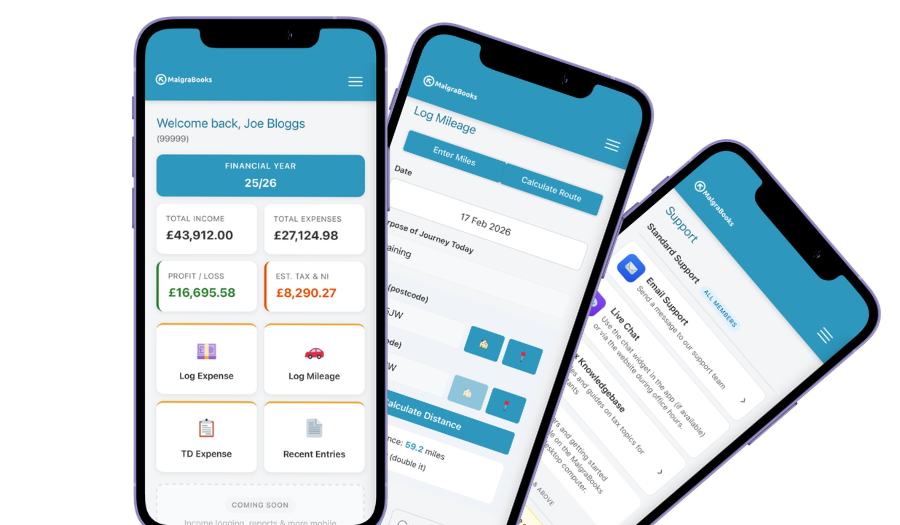
Access your accounts on your mobile
Designed for iPhone and Android phones, so you can add a payment, log a journey or scan a receipt between jobs, and check your reports and tax as you go.
See the mobile appHow Pulse helps
Pulse is our online bookkeeping system, with apps for iPhone and Android. Here’s what web designers and developers use most.
Quotes into invoices
Quote for a new site, a redesign or a block of development hours. When the client says yes, turn the quote into an invoice in one click, with nothing to type twice.
QuotesDeposits and balances online
Add your Stripe, SumUp or PayPal.Me link and a Pay online button appears on your invoices. The money goes straight to you, and Pulse tracks part payments and what’s still owed.
Online paymentsCare plans on repeat
Set each hosting or care plan client up once and choose monthly, quarterly or yearly. Pulse sends the invoice automatically, or saves it as a draft if you’d rather check it first.
Recurring invoicesRenewals remembered
Server bills, domain renewals and software subscriptions come round every month or year. Add them as recurring expenses and Pulse asks you to confirm each one when it’s due.
Recurring expensesHours at home
Most of your work happens at a desk in the spare room. Log your hours in the app and Pulse works out your working from home allowance for each month.
Working from homeStraight to HMRC
Pulse is recognised by HMRC for Making Tax Digital. Send your quarterly updates from Pulse, and your tax return if you choose that package.
Sending MTD updatesEverything in one package
Small Business Complete includes everything on this page. There are no invoice limits, and you can start partway through the year and add the months you've missed.
MalgraBooks is recognised by HMRC for Making Tax Digital. HMRC reference D5P1NR.
Small Business Complete
- Bookkeeping, invoicing and mileage in Pulse
- Unlimited receipt scanning
- Making Tax Digital quarterly updates
- Your tax return sent to HMRC
Questions web designers and developers ask us
I build sites alongside my job. Do I need to register?
If your web work brings in more than £1,000 in a tax year before costs, yes. You need to register by 5 October after the end of the tax year you started in. If your first paid site was in June 2026, that’s by 5 October 2027. You can have a job and be self-employed at the same time. How to register with HMRC
A client never paid their final invoice. Do I still pay tax on it?
Not on the cash basis. Money you’re owed but haven’t received isn’t income yet, so an unpaid invoice doesn’t go in your figures. If the client pays later, it counts when the money arrives. If you use traditional accounting, it works differently, so ask us.
Most of my work comes through one agency. Am I still self-employed?
Usually, if you quote for work, invoice when it’s done, work without someone supervising you and get no holiday or sick pay. If the agency sets your hours and manages you like a member of staff, your status may be different. HMRC explains how self-employed contractor status works, and you can ask us if you’re not sure.
I find clients through a freelance website. Does HMRC know?
It may well do. Since 1 January 2024, websites and apps where people sell services, freelancing included, have had to collect sellers’ details and income and report them to HMRC each January. Being reported doesn’t mean you owe more tax. Record what clients pay in full, and claim the fees the website takes as an expense. Selling on a digital platform
Can I claim the drive to a client meeting?
Usually, yes. If you work from home and go out to see different clients, those trips are business travel, there and back. Imran’s 9 miles to the bakery and home again comes to £4.95 at 55p a mile, and parking counts too. If you work at the same client’s office every day, that can look more like commuting, so ask us first. Cars, vans and mileage
Do I need to register for VAT?
Only if your turnover goes over £90,000 in any rolling 12 months. That’s everything clients pay you, including hosting and domains you buy in your name and charge back to them. VAT explained
Got a question that isn't here? Send us a message and the team will get back to you.