
Bookkeeping and Making Tax Digital (MTD) for self-employed wedding and event suppliers
Couples book you a year or more ahead with a deposit, pay the rest a few weeks before the big day, and then it’s a 6am start loading the van. Florists, planners, venue stylists, balloon artists, celebrants and cake makers all juggle the same thing: money for one wedding arriving across two tax years. Pulse keeps every quote, deposit and balance in one place, logs the miles to each venue and sends your Making Tax Digital updates to HMRC.
- Turn a quote into an invoice the day a couple books
- See every deposit paid and every balance still to come
- Send your quarterly updates and tax return straight to HMRC
Kirsty’s Saturday
Wedding flowers and styling-
Leaves home6:00am, van loaded with the arch, twelve centrepieces and buckets of flowers
-
Bride’s parents, Elm GroveBouquets and buttonholes by 8am. Emma and Josh pay their balance online from the invoice£9504.5 miles from home
-
Hollins BarnCeremony arch, table flowers and lanterns set up before guests arrive at 1pm8.0 miles
-
The Old Bakery tea room, Bridge Street4pm with Rachel and Ben about their wedding next summer. They accept the quote and pay a deposit£2006.5 miles
-
Hollins Barn10pm, takes down the arch and loads the lanterns back in the van6.5 miles
-
Back home11:15pm, buckets soaking for Monday8.5 miles
When Making Tax Digital starts for you
Making Tax Digital for Income Tax means keeping your records digitally and sending HMRC a short update every three months, then a final declaration after the tax year ends. Whether you're in depends on your turnover, the total you charge your customers before any expenses, not your profit.
- From 6 April 2026Over £50,000Already started
- From 6 April 2027Over £30,000Based on your 2025/26 tax return
- From 6 April 2028Over £20,000Based on your 2026/27 tax return
An example. You do 28 weddings a year at an average of £1,100 for flowers and styling, which is £30,800. Prop hire and a few birthday and christening displays bring in another £3,200. That’s £34,000 of turnover. On the cash basis, turnover is what you’re paid in the tax year, so deposits for next year’s weddings count too. If your 2025/26 tax return shows that, you’ll need to use Making Tax Digital from 6 April 2027.
The quarterly updates are due by 7 August, 7 November, 7 February and 7 May. If you have other self-employed work or rent out a property, that income counts towards the total too. When do I need to start?
Deposits, hire stock and the quiet months
Wedding work doesn’t fit neatly into a tax year. These are the things suppliers ask us about most.
When a deposit counts. Most sole traders use the cash basis, which has been the default since April 2024. On the cash basis you record money when you receive it. So a deposit for a wedding 18 months away counts in the tax year it lands in your account, and each later payment counts when it’s paid. If you’ve opted out and use traditional accounting, the money counts when you do the wedding, or when it’s clear the wedding isn’t going ahead and you’re keeping the deposit.
Cancellations and refunds. If a couple cancels and you keep the deposit, there’s nothing more to do on the cash basis, because it already counted when they paid. If you give some or all of it back, ask us how to record it.
Flowers, balloons and ingredients. Things you use up on the job are everyday costs. Stems and foliage, wire and ribbon, balloons and helium, ingredients and cake boards all go in as expenses when you pay for them.
Arches, backdrops and props you keep. Hire stock you use wedding after wedding is equipment, not an everyday cost. On the cash basis you still claim it as an expense in the year you buy it. On traditional accounting it goes in as a capital allowance, and the annual investment allowance usually lets you claim the full cost that year too. If the lanterns also come out for your own garden party, only claim the business share.
The quiet months. Most of your money arrives between spring and autumn, but your tax bill is due on 31 January, and many people pay a payment on account on 31 July as well. Moving a set share of every balance into a separate savings account means January isn’t a shock. Making Tax Digital quarterly updates are just updates. You don’t pay tax with them.
Your van. You can claim the mileage rate for every business journey, or the van’s actual running costs plus the cost of the van itself. Once you’ve chosen a method for a van, you stick with it.
Read more about capital allowances, payments on account and cars, vans and mileage, or HMRC’s guide to the cash basis.
| Rachel and Ben | Amount |
|---|---|
| Deposit at booking, June 2026, counts in 2026/27 | £200 |
| Second payment, February 2027, counts in 2026/27 | £700 |
| Balance, late July 2027, counts in 2027/28 | £700 |
| Flowers and styling total | £1,600 |
On the cash basis, £900 of this booking is income in 2026/27 and £700 in 2027/28. On traditional accounting, all £1,600 would count when the wedding happens in August 2027.
| Car or van | Per mile |
|---|---|
| First 10,000 business miles | 55p |
| Every mile after that | 25p |
The Autumn Budget 2026 plans to raise the 25p rate to 35p from 6 April 2027. If you claim mileage for a van, you can’t also claim its fuel or running costs.
What you can claim as a wedding or event supplier
Every allowable expense brings down the profit you pay tax and National Insurance on. These are the ones wedding and event suppliers claim most. Keep the receipt for each, or scan it into Pulse.
Flowers and sundries
Stems, foliage, wire, tape, ribbon, pins, vases you hand over with the arrangements, and the buckets you carry them in.
Balloons and baking supplies
Balloons, helium, weights and frames for displays, or ingredients, sugarpaste, boards, dowels and boxes for each cake order.
Hire stock you own
Arches, backdrops, plinths, lanterns, chair sashes, cake stands and signs. Rent on a lock-up to store it all counts too. See how bigger items work above, or read about capital allowances.
Your van or car
The mileage rate for trips to venues, couples’ homes and suppliers, or your van’s actual costs. Parking at a venue counts too. Cars, vans and mileage
Insurance
Public liability insurance for working at venues, and cover for hire stock and kit while it’s in the van or set up on the day.
Wedding fairs and advertising
A stand at a wedding fair, a paid listing on a wedding directory, samples for showing couples, your website and social media ads. Marketing costs
Courses
A sugarcraft class, a balloon modelling workshop or a food hygiene course that builds on the business you already run. Training costs
Planning at home
Planners and celebrants spend hours on calls, timings and scripts at the kitchen table. Work at home for 25 hours or more a month and you can claim a flat rate of £10 to £26 a month. Simplified expenses
What you can’t claim
- The smart outfit you wear on the day, because it’s everyday clothing
- Flowers, cakes or balloons for your own family’s celebrations
- Fuel and running costs for your van if you claim mileage for it
- Parking fines outside a venue, or any other fines
- Training to start a completely new kind of business, rather than the one you already run
For the full list, see Allowable expenses, what are they?
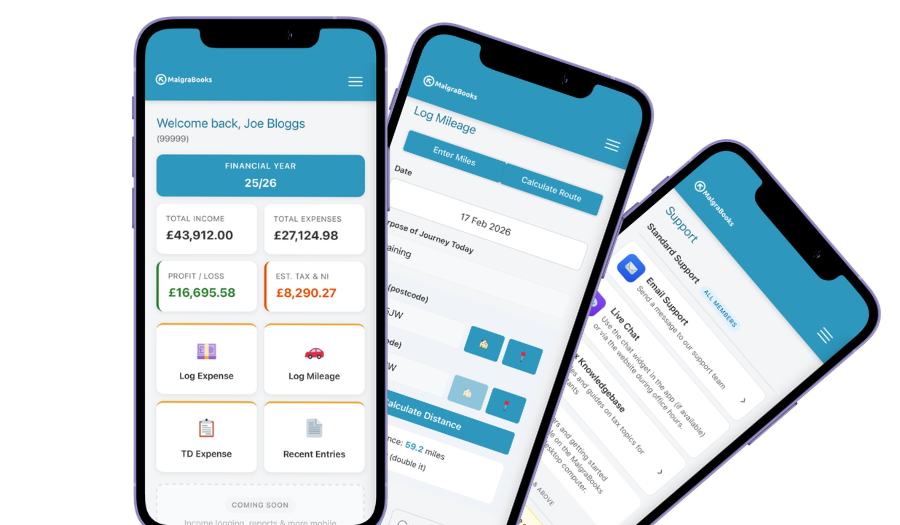
Access your accounts on your mobile
Designed for iPhone and Android phones, so you can add a payment, log a journey or scan a receipt between jobs, and check your reports and tax as you go.
See the mobile appHow Pulse helps
Pulse is our online bookkeeping system, with apps for iPhone and Android. Here’s what wedding and event suppliers use most.
Quotes into invoices
Price up the bouquets, arch and table flowers, or the cake and delivery, and send the couple a quote. When they book, turn it into an invoice in one click.
QuotesDeposits and part payments
Add your Stripe, SumUp or PayPal.Me link and a Pay online button appears on the invoice. Couples pay the deposit, then the rest when it suits them. The money goes straight to you, and each part payment is tracked.
Online paymentsKnow who still owes
When a couple pays by bank transfer instead, mark the invoice as paid. Anything still open is a balance to chase before the big day, not after.
Marking an invoice as paidMiles to every venue
Enter postcodes or use your location, and Pulse works out the miles. Save the venues, churches and wholesalers you use often in the Address Book, so the set-up and the late-night pack-down both take seconds to log.
Logging mileageScan your receipts
Photograph the wholesaler’s ticket, the helium bill or the receipt for a new backdrop in the app and it’s saved against the expense, before it ends up in a bucket of water.
Receipt scannerStraight to HMRC
Pulse is recognised by HMRC for Making Tax Digital. Send your quarterly updates from Pulse, including the busy summer ones, and your tax return if you choose that package.
Sending MTD updatesEverything in one package
Small Business Complete includes everything on this page. There are no invoice limits, and you can start partway through the year and add the months you've missed.
MalgraBooks is recognised by HMRC for Making Tax Digital. HMRC reference D5P1NR.
Small Business Complete
- Bookkeeping, invoicing and mileage in Pulse
- Unlimited receipt scanning
- Making Tax Digital quarterly updates
- Your tax return sent to HMRC
Questions wedding and event suppliers ask us
I do weddings at weekends alongside my job. Do I need to register?
If your wedding and event work brings in more than £1,000 in a tax year before costs, yes. The Autumn Budget 2026 plans to raise this to £3,000 from 6 April 2027. You need to register by 5 October after the end of the tax year you started in, so if your first paid wedding was in May 2026, that’s by 5 October 2027. You can have a job and be self-employed at the same time. How to register with HMRC
A couple has cancelled. What happens to the deposit in my books?
Your booking terms decide whether you keep it. If you keep it and use the cash basis, there’s nothing more to do, as it counted as income when they paid. If you use traditional accounting, it counts once it’s clear the wedding isn’t going ahead. If you refund some or all of it, ask us how to record it.
I make wedding cakes in my own kitchen. Is there anything else to sort out?
Yes. If you sell food regularly, you need to register as a food business with your local council, ideally at least 28 days before you start. It’s free, and it applies to home kitchens too. Starting a food business. For tax, claim your ingredients, boards and boxes, and the hours you spend baking and decorating at home count towards the working from home flat rate.
I sold some old hire stock to another stylist. Is that income?
Usually, yes. On the cash basis, if you claimed the arch or backdrop as an expense when you bought it, the money you get for it goes in as business income. If you only claimed part of the cost because it was used privately too, only the same part counts. If you use traditional accounting, the sale goes through your capital allowances instead.
I’m joining Making Tax Digital in April 2027. What if wedding season gets on top of me?
Your first update covers April to early July and is due by 7 August, right in the middle of the season. The Autumn Budget 2026 plans no penalty points for late quarterly updates in 2027/28 for people joining in April 2027. It’s still worth adding payments and receipts as they happen, so each update takes minutes. What the Budget means for you
Do I need to register for VAT?
Only if your turnover goes over £90,000 in any rolling 12 months. That’s everything couples and clients pay you, including flowers, hire and anything you buy in for them. Planners who pay other suppliers and add it to their invoice should keep an eye on this. VAT explained
Got a question that isn't here? Send us a message and the team will get back to you.