
The Chancellor, John Healey, delivered his first Budget on Wednesday 28 October. As promised, we’ve been through the detail to pick out what matters if you’re self-employed, whether you’re a Slimming World consultant, a cleaner, a hairdresser or running another small business.
The good news first: there’s no change to the rates of income tax, National Insurance or VAT. Here are the main points.
Mileage rates are going up
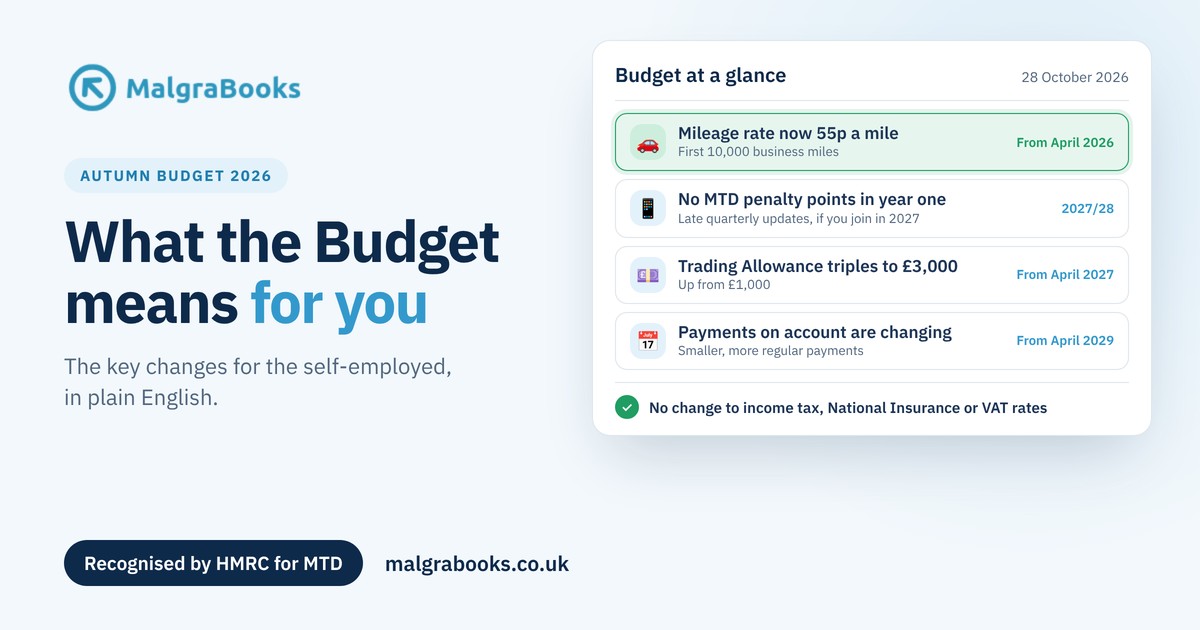
This is the big one for anyone who drives for work. The tax-free mileage rate for cars and vans is now 55p a mile for the first 10,000 business miles, up from 45p. It was announced as a temporary rate in May and has now been made permanent. It applies from 6 April 2026, so it covers the current 2026/27 tax year.
From 6 April 2027, the rate for miles over 10,000 also goes up, from 25p to 35p.
For example, if you drive 6,000 business miles a year, you can now claim £3,300 instead of £2,700. That’s an extra £600 of expenses, which saves a basic rate taxpayer around £156 in tax and National Insurance.
If you log your journeys in Pulse, the new rate will be applied for you automatically.
Making Tax Digital
If you’re joining Making Tax Digital for Income Tax in April 2027 (that’s anyone with qualifying income over £30,000), there’s some welcome breathing space. You won’t get penalty points if any of your first four quarterly updates for 2027/28 are sent late.
The government also says it is delaying MTD for “several taxpayer groups” until further notice. It hasn’t said which groups yet, so we’ll share more once HMRC publishes the detail.
If you’re already using MTD, nothing changes and you carry on as normal. MalgraBooks is recognised by HMRC for Making Tax Digital, so Pulse has you covered.
The Trading Allowance is tripling
From 6 April 2027, the Trading Allowance goes up from £1,000 to £3,000. This means you can earn up to £3,000 a year from small side income, like selling crafts or the odd bit of freelance work, without paying tax on it.
As now, you use the allowance instead of claiming your actual expenses, so if your expenses are higher it’s usually better to claim those.
Higher tax on rental and savings income
If you have income from property or savings, tax on this will go up by a further two percentage points from April 2027, on top of the rise announced last year. For example, a basic rate taxpayer will pay 24% on rental profits instead of 20%. Your self-employed earnings aren’t affected.
The cash ISA limit stays at £20,000.
For VAT-registered businesses
A couple of changes are on the way, although neither happens straight away:
- From 1 April 2029, VAT invoices will need to be sent in a set electronic format (e-invoicing). Full details are due by April 2028.
- Also from April 2029, you’ll need a direct debit in place for VAT return payments. You can still pay another way before the deadline, and the direct debit will collect anything left unpaid.
Paying your tax bill
From April 2029, if you make payments on account, you’ll pay smaller, more regular amounts through the year instead of two big payments in January and July. The idea is to avoid large bills landing all at once. It’s a while off yet and we’ll keep you posted.
Help with household costs
- The 5p cut in fuel duty is extended to 1 July 2027.
- The cut to VAT on household electricity continues until July 2027.
- Up to 20 million households in England will get a £100 Household Energy Payment from January 2027, paid through council tax.
Anything else?
A couple of smaller changes worth knowing about:
- From April 2029, self-employed dads, partners and adopters will be able to get parental pay.
- If you employ anyone, the National Living Wage goes up to £13.21 an hour from 1 April 2027.
Questions?
Budgets can be a lot to take in, and some of the detail is still to come from HMRC. If you’re not sure how anything affects you, get in touch and the team will be happy to help. Our Tax Knowledgebase is also a great place to look things up.
Not using Pulse yet? Have a look at our pricing page to see our packages.
