
Lots of us have had a clear-out and put things on Facebook Marketplace or Vinted. Then you read a headline about online platforms reporting sellers to HMRC, and you start to wonder if you’ve done something wrong. For most people, the answer is no. Here’s how it works, where the line sits, and what to do if you’ve crossed it.
What the platforms tell HMRC
Since 1 January 2024, websites and apps that let people sell goods have had to collect details about their sellers. Each year they send your details and what you earned from sales on their platform to HMRC, by the end of the following January. So sales made in 2024 were reported by 31 January 2025.
Not everyone gets reported. A platform doesn’t have to report you if, in a calendar year, you make fewer than 30 sales of goods and get 2,000 euros or less, which is about £1,700. Go over either of those and your details will probably be passed on.
Here’s the part the headlines tend to skip. HMRC says that a platform reporting your details does not automatically mean you owe tax. Being on a list is not the same as having a tax bill.
Selling your own things is usually fine
HMRC’s own guidance says you’re unlikely to pay tax if you sell personal items from your home, like the contents of a loft or garage. Most of the time, you’re selling something for less than you paid for it. There’s no profit, and you’re not running a business.
Take Sarah. Her children have outgrown a lot of clothes, so she lists them on Vinted in bundles and sells 35 of them for £420 over the year. She also sells the old sofa on Facebook Marketplace for £150. Because she made more than 30 sales on Vinted, Vinted may well report her to HMRC. But she owes nothing. She was clearing out her own used things, not trading.
When it becomes trading
Things change when you buy or make things in order to sell them at a profit. HMRC says that if you buy or make goods to sell at a profit, you’re likely to be trading and will have to pay tax on your profits.
There isn’t one simple test. HMRC uses a set of signs called the badges of trade. In plain words, they ask questions like these:
- Did you buy the item meaning to sell it on for more?
- Are you doing it again and again, or was it a one-off?
- Did you fix up, clean or change the item to get a better price?
- Do you sell in an organised way, like a business would?
- How long did you keep the item before selling it?
No single answer decides it. HMRC looks at the overall picture.
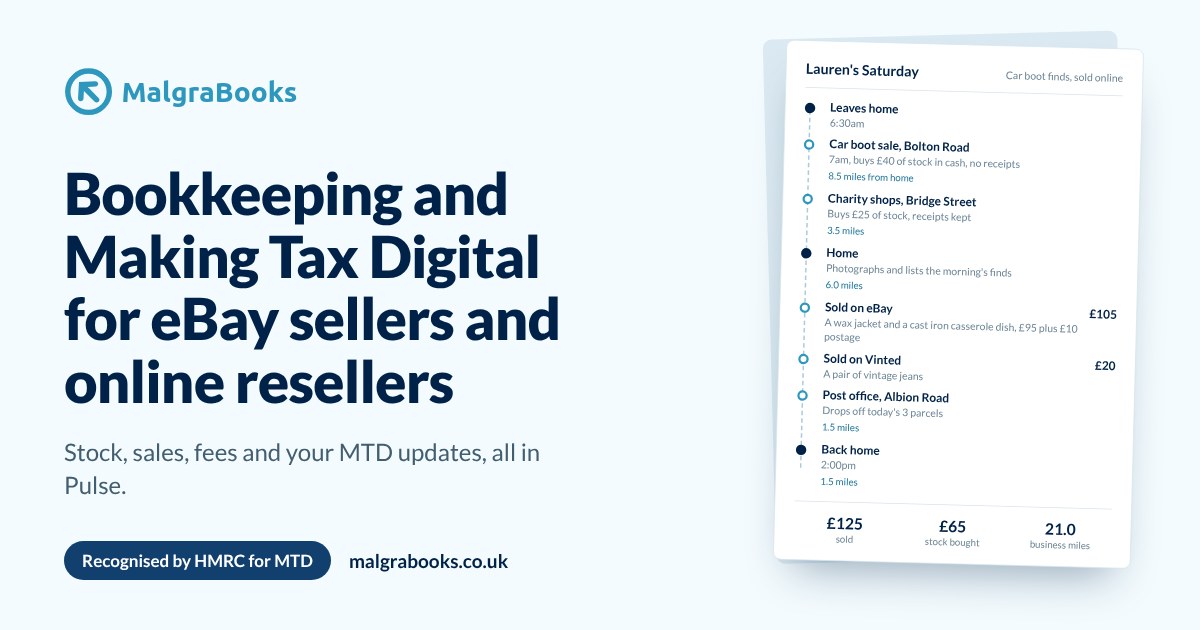
Now take Jamie. Most Saturdays Jamie goes to car boot sales, buys branded clothes for a pound or two, and lists them on Vinted. Over the year Jamie spends £1,200 on stock and sells it for £3,000. That’s trading. Jamie is buying things to resell at a profit, often and in an organised way.
The £1,000 trading allowance
Even if you are trading, small amounts can be tax-free. Most people can use a £1,000 trading allowance each tax year (6 April to 5 April). If your total trading income is £1,000 or less, you don’t need to tell HMRC about it.
That’s your income before costs, not your profit. So if you bought £300 of stock and sold it for £800, you’re under the allowance. If you sold it for £1,100, you’re over it.
Once you’re over £1,000, you need to register for Self Assessment by 5 October after the end of the tax year you started. If Jamie started in May 2026, that’s 5 October 2027. You can then either deduct your actual costs, or take the £1,000 allowance instead. Jamie’s stock cost £1,200, so deducting the real costs gives a lower profit of £1,800.
What about big one-off sales?
Selling a single personal possession for more than £6,000 can bring Capital Gains Tax into play. For everyday things like clothes, toys and furniture, this won’t apply. If you’re selling something valuable, like jewellery or a painting, it’s worth checking HMRC’s guidance first.
A note on Making Tax Digital
If reselling grows into a proper business, Making Tax Digital for Income Tax may apply to you. It’s based on your qualifying income, which means your total turnover from self-employment and property before expenses. The thresholds are:
- over £50,000 from 6 April 2026
- over £30,000 from 6 April 2027
- over £20,000 from 6 April 2028
Most people selling on the side are well below these. But it helps to keep good digital records from the start, so you’re ready if you grow.
If you’re trading, here’s what helps
Keep a simple record of what you buy, what you sell and what it costs you to post things. Keep receipts where you can, and jot down what you paid for car boot buys. It makes your tax return far easier and means you only pay tax on your real profit. Our guide on recording stock and goods for resale walks you through it, and there’s a step-by-step guide on how to register with HMRC.
Pulse is our HMRC-recognised bookkeeping software for sole traders. You log your sales and costs as you go, and it works out your profit for your tax return. You can see our small business packages here.
Find your trade
If you sell online, have a look at our pages for eBay and online resellers, Etsy sellers and craft fair and market traders. You’ll find the rest on our small business page.
Not sure which side of the line you’re on? Send us a message and we’ll be happy to help.
